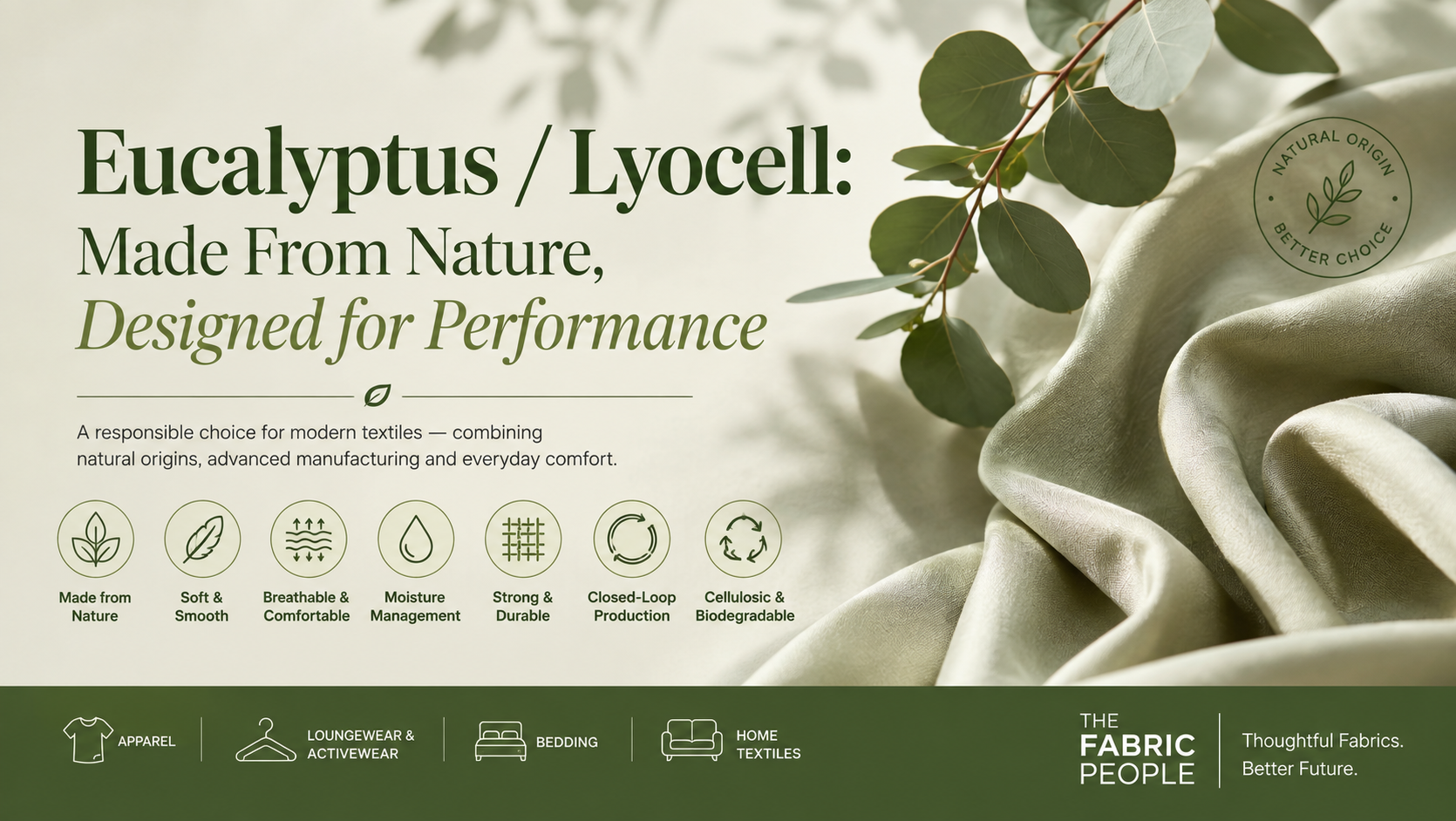
When we talk about sustainable fabrics, the conversation should go beyond simply calling a material “eco-friendly.” Today’s fashion and textile industry is looking for fibres that can offer a balance of comfort, performance, durability and more responsible production.
This is where Lyocell has become an increasingly interesting choice for modern textile brands.
Lyocell is a regenerated cellulosic fibre made from wood pulp. It is produced using a closed-loop manufacturing process, which is designed to recover and reuse much of the solvent used during production. Eucalyptus is one of the wood sources that can be used to produce Lyocell, making Eucalyptus / Lyocell fabrics an attractive option for brands looking to explore plant-based fibre solutions.
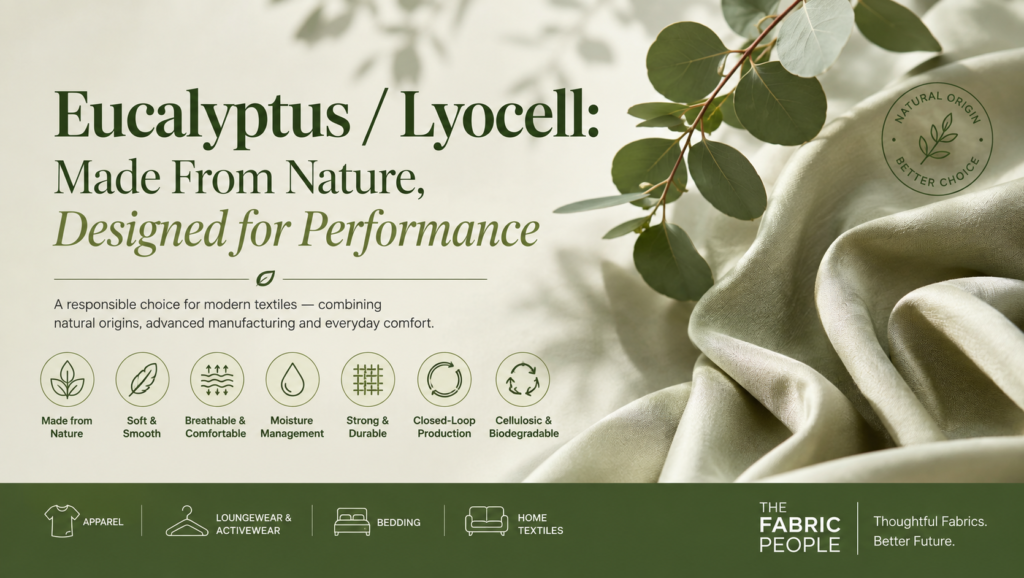
What Is Lyocell?
Lyocell belongs to the family of regenerated cellulosic fibres. Unlike synthetic fibres that are generally derived from petroleum-based raw materials, Lyocell begins with cellulose sourced from wood.
The cellulose is processed and transformed into a fibre that can then be spun into yarns and developed into a wide range of fabrics. Depending on the construction, Lyocell can be woven or knitted into fabrics with different weights, textures, finishes and performance characteristics.
One of the most notable aspects of Lyocell production is its closed-loop solvent recovery system. The process is designed to recover and reuse a significant proportion of the solvent, helping reduce unnecessary waste within the manufacturing cycle.
Why Eucalyptus / Lyocell Is Becoming Popular
Modern consumers are increasingly interested in understanding what their clothes are made from and how those materials are produced. At the same time, brands need fabrics that don’t compromise on appearance, comfort or performance.
Lyocell offers an interesting combination of these qualities.
✨ Soft, Smooth & Premium Feel
One of the key characteristics of Lyocell is its exceptionally smooth hand feel. Fabrics made with Lyocell can feel soft and comfortable against the skin, making them particularly suitable for garments where comfort is an important consideration.
Its smooth surface can also contribute to a refined and premium appearance, making Lyocell suitable for everything from everyday basics to elevated fashion collections.
💨 Breathable & Comfortable
Lyocell fabrics can provide a comfortable wearing experience, particularly when used in lightweight or breathable fabric constructions.
This makes them suitable for shirts, dresses, loungewear, sleepwear, active-inspired garments and other everyday clothing where comfort and breathability are important.
💧 Moisture Management
Another reason Lyocell attracts attention is its ability to help create a fresh and comfortable feel.
Depending on the fabric construction and finishing, Lyocell can support moisture management and contribute to a comfortable wearing experience. This makes it an interesting option for clothing designed for everyday movement and warmer environments.
🧵 Strength & Durability
Softness doesn’t necessarily mean delicate.
Lyocell fibres can provide good strength and durability, allowing them to be developed into fabrics intended for regular wear and repeated use. With the right construction and care, Lyocell fabrics can be used for products where both comfort and long-term usability matter.
🌱 Cellulosic & Biodegradable
Lyocell is a cellulosic fibre derived from plant-based cellulose. Under appropriate conditions, cellulosic fibres can biodegrade, although actual end-of-life behaviour depends on factors such as the final fabric composition, dyes, finishes, blends and disposal environment.
This is an important distinction when discussing sustainable textiles: the fibre itself is only one part of a garment’s overall environmental story.
The Importance of Closed-Loop Production
When evaluating textile fibres, it is useful to look beyond the raw material and consider how the fibre is manufactured.
Lyocell is known for its closed-loop production approach. During manufacturing, the solvent used to transform cellulose into a fibre is designed to be recovered and reused within the process.
This approach can help minimise solvent loss and reduce waste compared with processes where chemicals are used once and discarded.
For brands exploring more considered textile solutions, this production model is one of the features that makes Lyocell particularly interesting.
Versatility Across Different Textile Applications
Lyocell isn’t limited to one category of clothing. Its combination of softness, drape, comfort and strength makes it suitable for a broad range of textile applications.
Depending on the construction, Lyocell can be developed for:
- Fashion apparel
- Casualwear
- Shirts and blouses
- Dresses and skirts
- Loungewear
- Sleepwear
- Activewear and athleisure
- Underwear
- Lightweight trousers
- Bedding
- Home textiles
- Soft furnishings
Its adaptability also allows textile manufacturers to experiment with different weaves, weights, textures and finishes, giving designers greater flexibility when developing a collection.
More Than Just a Sustainable Fabric Choice
For brands, choosing a fibre is not simply about sustainability. A successful fabric also needs to meet the practical and aesthetic requirements of the final product.
This is where Lyocell can offer a strong balance.
It can combine a premium appearance with a soft hand feel, comfortable wearability, useful performance characteristics and a fibre story based on wood-derived cellulose.
Of course, the overall sustainability of a finished garment depends on much more than the fibre alone. Dyeing, finishing, blending, manufacturing, transportation, garment lifespan and end-of-life management all play a role.
That is why responsible fabric sourcing should consider the complete textile lifecycle, rather than focusing on a single sustainability claim.
Customisation for Modern Brands
At The Fabric People, we understand that every brand has different fabric requirements.
That’s why we source and develop Eucalyptus / Lyocell fabrics in a variety of weaves, weights and textures, allowing brands and designers to select materials that suit their specific collections.
Our fabric development options can include:
- Different fabric weights and constructions
- Various woven and knitted qualities
- Custom textures and finishes
- Azo-free dyeing options
- Custom printing
- Special finishing treatments
- Bespoke fabric development for specific applications
Whether you’re developing a premium fashion collection, comfortable everyday clothing, loungewear, active-inspired apparel or home textiles, we can help explore Lyocell fabric options that align with your product requirements.
A Fabric for the Future of Responsible Textiles
The future of textiles is not about finding one “perfect” sustainable fibre. It is about making better-informed material choices and understanding how fibres are sourced, produced, processed and ultimately used.
Eucalyptus / Lyocell represents one of the interesting developments in this space. With its plant-derived cellulose, soft feel, versatility, performance potential and closed-loop production approach, it offers brands an opportunity to explore a fibre that brings together comfort, aesthetics and more considered manufacturing.
For designers and brands looking to move beyond conventional textile choices, Lyocell can be a valuable addition to a modern fabric portfolio.
Discover Eucalyptus / Lyocell Fabrics with The Fabric People
Looking for the right Lyocell fabric for your next collection?
The Fabric People can help you explore Eucalyptus / Lyocell qualities across different weights, weaves, textures, colours, prints and finishes, with options for customised fabric development.
From concept to finished fabric, we’re here to help you find a textile solution that combines performance, comfort and thoughtful material selection.
Made from nature. Designed for performance. Developed for modern textiles.